The Vibeary — round-up
Best developer utilities for shipping faster
Most productivity gains are not frameworks — they are small, boring packages that remove one recurring day of work. Type-safe helpers that make invalid states unrepresentable, build and DX CLIs that cut a minute off every run, visual QA tooling that catches regressions before a human does, and performance debugging utilities that turn a vague slowness complaint into a flame graph. This shelf collects those. They are also exactly the kind of dependency an AI coding agent handles well, because they are stable, well typed and well documented.
What earned a place
- Does one thing and is easy to remove later
- Properly typed, with types that catch real mistakes
- Stable API and real maintenance
- Works in a normal CI environment without exotic setup
24 picks from the library
- 01
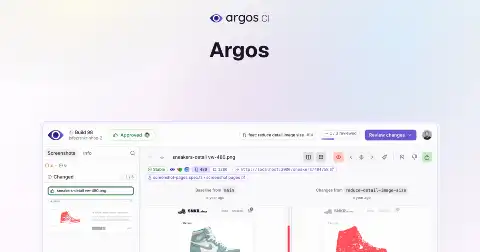
Argos
Visual review platform that stabilises screenshots, groups diffs per pull request and hosts Storybook and static build previews.
Why it made the list: A fraction of Percy or Chromatic pricing with a better diff-review interface.
Visual QA & testingfreemiumGreg Bergé (@gregberge)argos-ci.com
- 02
automd
Markdown maintainer that regenerates blocks in your README from live data such as package metadata, file contents or badges.
Why it made the list: Keeps README examples from silently rotting, with no docs site required.
UnJS toolkitMITUnJS / Pooya Parsa (@pi0)unjs.io
- 03
blueprint
macOS CLI that turns an Icon Composer .icon or .appiconset into an Xcode-style blueprint version, with optional tinted RC or BETA badges for debug builds.
Why it made the list: Instantly tells debug and release builds apart on your home screen, with real craft.
Build & DX CLIMIT@MustafaNaturgithub.com
- 04
Boxed
Functional building blocks for TypeScript: Option, Result, AsyncData and Future types with a fluent, non-academic API.
Why it made the list: fp-ts ergonomics without the category-theory vocabulary. Shipped by a real fintech.
Type-safe TypeScriptMITSwan (@swan-io)github.com
- 05
bumpp
Release CLI that bumps package versions, updates the changelog, creates the git tag and pushes, with an interactive prompt.
Why it made the list: The 30-line replacement for semantic-release that solo maintainers actually stick with.
Build & DX CLIMITAnthony Fu (@antfu)github.com
- 06
cf
Open-beta Cloudflare CLI generated from the full API OpenAPI surface, with JSON-first output, intent search, and TypeScript config for agents.
Why it made the list: Lets coding agents drive every Cloudflare product through one searchable, schema-backed CLI.
Build & DX CLIApache-2.0Cloudflaregithub.com
- 07
citty
Composable CLI builder with typed argument definitions, nested subcommands, auto-generated usage output and lazy command loading.
Why it made the list: The nicest small CLI framework in JS, hidden inside the UnJS package wall.
UnJS toolkitMITUnJS / Pooya Parsa (@pi0)unjs.io

- 08
Clipanion
Type-safe CLI framework with zero runtime dependencies where commands are classes and argument types flow into your handler.
Why it made the list: Yarn's own CLI engine, extracted. Better types than commander, almost nobody uses it directly.
Build & DX CLIMITMaël Nison (@arcanis)github.com
- 09
Creevey
Cross-browser visual testing tool for Storybook with an interactive UI for approving diffs and Docker-based browser grids.
Why it made the list: The approve-diffs-in-a-browser workflow that usually requires a paid SaaS.
Visual QA & testingMITDmitriy Lazarev (@wKich)github.com
- 10
DriveSync
Fast Git-styled CLI that syncs files and folders with Google Drive, aimed at developers who want Drive without the GUI.
Why it made the list: Drive sync with familiar git-like commands instead of a heavy desktop client.
Build & DX CLIunknown@scaleninjagithub.com
- 11
Engrim
Local-first SQLite episodic memory so Claude Code, Cursor, Antigravity, and Codex share decisions across model switches on one project.
Why it made the list: One project memory pack that survives /clear and vendor hops.
Build & DX CLIMITTim Gordon (@timgordontg)github.com
- 12
envsafe
Tiny runtime validator that parses and coerces environment variables against a schema and fails the process at boot with a readable report.
Why it made the list: By tRPC's author; fails fast at startup instead of undefined three screens deep.
Type-safe TypeScriptMITAlex Johansson (@alexdotjs)github.com
- 13
fontaine
Build plugin that generates metric-matched local fallback fonts automatically, eliminating layout shift while a webfont loads.
Why it made the list: Kills font-swap layout shift with one plugin line. Directly visible design win.
UnJS toolkitMITUnJS / Daniel Roe (@danielroe)unjs.io
- 14
framework-tracker
Continuously benchmarks popular web frameworks on bundle size and runtime metrics and publishes the comparison as an open dataset.
Why it made the list: Neutral, reproducible framework numbers instead of vendor benchmark marketing.
Perf & debuggingMITe18e communitygithub.com
- 15
giget
Downloads templates and subdirectories from GitHub, GitLab or Bitbucket into a local folder, with caching and offline support.
Why it made the list: The scaffolding primitive behind half the create-* CLIs you use, usable directly.
UnJS toolkitMITUnJS / Pooya Parsa (@pi0)unjs.io

- 16
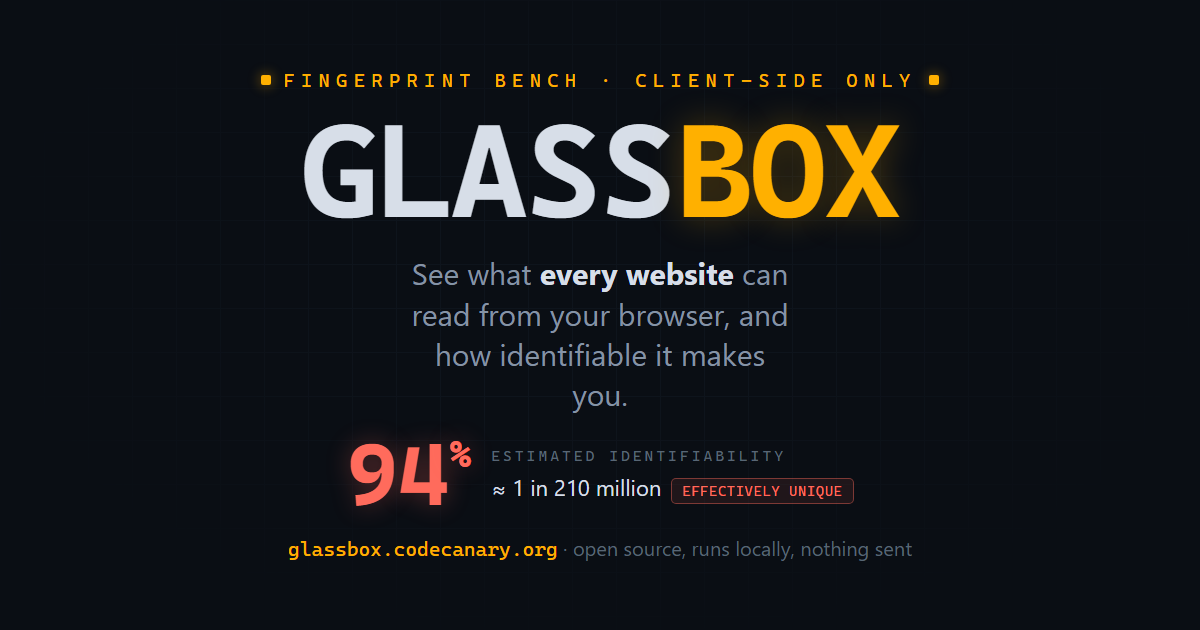
GlassBox
Client-side fingerprint bench that runs every signal a site can read from your browser and rates how identifiable each one makes you.
Why it made the list: Shows the tracking surface you ship by default, with honest entropy caveats.
Perf & debuggingopen-sourceCodeCanary (HotStartLabs)glassbox.codecanary.org
- 17
GoLive
Open-source agent skill plus zero-dependency Node CLI that detects, plans, approves, and applies hosting, database, domain, email, and payments on your own accounts.
Why it made the list: Closes the last mile after vibe-coding: go live without a GoLive cloud account or telemetry.
Build & DX CLIMIT@mikehasagithub.com
- 18
Heroshot
Automates product and documentation screenshots by letting you visually pick elements and regenerate images whenever the UI changes.
Why it made the list: Marketing screenshots that regenerate themselves. Rare crossover between QA and design ops.
Visual QA & testingopen-source@omachalagithub.com
- 19
ipx
Self-hosted image proxy built on sharp that resizes, crops and reformats images from URL path modifiers, with caching.
Why it made the list: Your own Cloudinary in a Node process, with no per-transform billing.
UnJS toolkitMITUnJS / Pooya Parsa (@pi0)unjs.io
- 20
jevgrep
CLI that asks a repository what it does and returns relevant files plus verbatim source excerpts for coding agents via Jev.
Why it made the list: Same SWE-bench solve rate as baseline agents at about thirty percent lower cost.
Build & DX CLIMIT@dzhnggithub.com
- 21
Keel
Offline Swift CLI that inspects, documents, and scaffolds iOS projects with evidence-backed architecture checks and optional AI.
Why it made the list: Reads unfamiliar iOS codebases with line-level claims, AI only if you ask.
Build & DX CLIMITChethan Nayak (@GRimAce11)github.com
- 22
Ladle
Vite-powered component workbench compatible with Component Story Format and controls, running as a single dependency and command.
Why it made the list: Storybook stories without Storybook's install weight or minute-long cold starts.
Visual QA & testingMITVojtech Miksu (@tajo)ladle.dev
- 23
Loki
Visual regression tool for Storybook that renders stories in Chrome, iOS simulator or Android emulator and diffs the results.
Why it made the list: One of the very few visual regression tools that covers React Native surfaces too.
Visual QA & testingMITJoel Arvidsson (@oblador)github.com

- 24
Lost Pixel
Visual regression runner that screenshots Storybook, Ladle, Histoire or page URLs in CI and reports pixel diffs on pull requests.
Why it made the list: Self-hostable Chromatic replacement; the OSS mode costs nothing at any snapshot volume.
Visual QA & testingMITLost Pixel (@lost-pixel)github.com
Questions
- How do I avoid dependency bloat?
- Prefer packages you could plausibly rewrite in a day, and audit the tree after every install.
- Which utilities help most with AI-assisted coding?
- Strong typing and fast feedback loops. Both narrow the space in which an agent can produce something plausible but wrong.